Home · Cycle Tracking
How to Track Your Menstrual Cycle: The Complete 2026 Method
Tracking your period is step one. Tracking your whole menstrual cycle — ovulation, symptoms, energy and all — is what turns scattered data into real self-knowledge. Here's exactly how to do it.
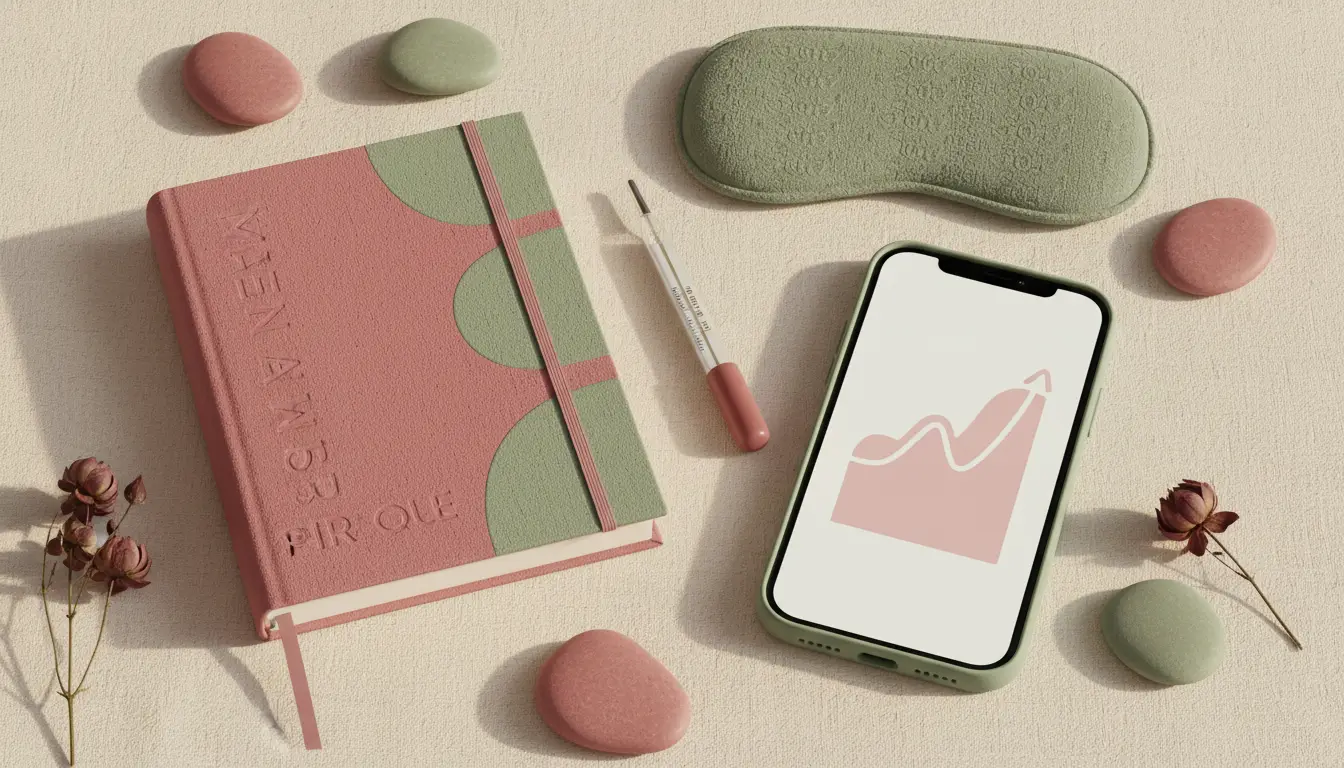
There's a difference between tracking your period and tracking your menstrual cycle. The first is just noting when you bleed. The second is following the whole monthly hormonal arc — the rise and fall of estrogen and progesterone that shapes your energy, mood, skin, sleep and fertility. Do the second well and your cycle stops being a monthly surprise and becomes a readable, useful signal.
This is a complete, practical method: what to record, which tracking methods exist, how to read your own patterns, and how AI-based apps have made the whole thing nearly effortless. Whether you're tracking for fertility, for health, or just to understand yourself better, this is the full playbook.
What this guide covers
- Why track the whole cycle, not just your period
- What to record (the core signals)
- The 4 tracking methods
- How to read your patterns
- How AI makes cycle tracking effortless
- Common mistakes to avoid
- Manual vs app tracking: pros and cons
- Set up your tracking in 5 minutes
- Tracking for different goals
- Using your data: cycle syncing
- What tracking reveals about your health
- Basal body temperature: how-to
- Cervical mucus tracking: how-to
- How to read your chart
- Cycle symptoms by phase
- Digital, paper or wearable?
- When your tracking doesn't add up
- How your cycle changes across life
- Tracking while on birth control
- Ovulation kits & fertility monitors
- Keeping your cycle data private
- The easiest accurate method we recommend
- What readers say
- Frequently asked questions
Why track the whole cycle, not just your period
Your menstrual cycle is often called a "fifth vital sign," because its length, regularity and symptoms are a running readout of your hormonal health. Tracking only your period tells you when you bleed; tracking the whole cycle tells you when you ovulate, when your energy peaks, when PMS is likely, and whether anything is changing in a way worth noting. That's the difference between a logbook and genuine insight. If you're brand new to this, start with our simple primer on how to track your period, then come back here for the full picture.
What to record: the core signals
You can start with just two data points and add richness as it becomes habit. Here are the signals worth recording, roughly in order of importance:
- Period start and end dates. The backbone of every prediction. Day one is the first day of real red bleeding.
- Flow. Light, medium, heavy or spotting. Changes over time are worth noticing.
- Cervical mucus. Its texture is one of the clearest natural signs of approaching ovulation — clear and stretchy near your fertile window, thicker and drier after.
- Basal body temperature (BBT). Taken first thing each morning, a small sustained rise confirms ovulation has happened.
- Symptoms. Cramps, headaches, bloating, breast tenderness, skin changes.
- Mood and energy. These track the cycle more closely than most people expect.
- Sleep and libido. Both shift predictably across the month and add useful context.
Don't try to log everything at once
Start with period dates and one fertility signal (cervical mucus is easiest and free). Add symptoms and mood once the habit sticks. Consistent simple data beats detailed data you abandon.
The 4 ways to track your menstrual cycle
1. The calendar method
The simplest: mark your period start dates and count cycle lengths. Good for spotting your average, but blind to ovulation nuance and symptom patterns on its own.
2. The basal body temperature method
Measuring your resting temperature each morning reveals the small post-ovulation rise driven by progesterone. It confirms ovulation after the fact, which is excellent for learning your pattern over time.
3. The cervical mucus method
Observing the change to clear, stretchy, egg-white mucus signals your most fertile days in advance. Combined with BBT, this is the basis of fertility-awareness methods.
4. App-based tracking (with AI)
A modern app lets you log all of the above in seconds and does the maths for you — predicting your period and fertile window, mapping your cycle phases, and surfacing patterns automatically. For most people in 2026 it's the easiest accurate option, which is why it's increasingly the default.
How to read your patterns
After two to three cycles, look for the throughlines. When does your energy reliably peak? When does mood dip? How many days before your period do cramps start? Does your cycle lengthen after stressful months? These patterns are the payoff of tracking — they let you anticipate your body instead of reacting to it. Understanding the underlying biology helps here; our breakdown of the four menstrual cycle phases explains why each week feels different.
How AI makes cycle tracking effortless
The biggest shift in recent years is that you no longer have to do the interpretation yourself. An AI-based app learns your individual cycle length and variability, weighs multiple signals together, improves its predictions every cycle, and increasingly explains your data in plain language — so "why am I exhausted this week?" gets an answer grounded in your own logged history. It also reduces the logging burden by pulling data from wearables where available. For the full picture of how this works, see our explainer on AI period and ovulation calendar apps.
Common mistakes to avoid
- Logging inconsistently — gaps weaken every prediction and pattern.
- Tracking only your period — you miss ovulation and symptom insight.
- Expecting perfection in month one — patterns need two to three cycles to emerge.
- Treating predictions as guarantees — they're informed estimates with a window.
- Ignoring privacy — your cycle data is sensitive; choose a private, on-device app.
Manual vs app tracking: pros and cons
| Pros | Cons |
|---|---|
| Manual tracking is free and teaches you the fundamentals | Manual methods are easy to forget and slow to interpret |
| App tracking is fast, automatic and increasingly accurate | Best app features may need a subscription |
| Apps surface patterns you'd never spot by hand | Cloud-based apps can pose a privacy risk |
| AI apps improve the longer you log | Any method needs consistency to be useful |
| Both create a doctor-ready record over time | Accuracy still drops during irregular or transitional phases |
How to set up your cycle tracking in 5 minutes
Getting started is quicker than people expect. Here's the fastest path to a tracking system that actually works:
- Gather your recent dates. Jot down the start dates of your last two or three periods if you can remember them. This gives any tool an instant baseline.
- Choose your method. For most people, an app is the easiest accurate option; if you prefer analog, a dedicated calendar plus a basal thermometer works too.
- Enter your baseline. Add those recent start dates so the prediction has something to work from on day one.
- Pick your daily signals. Start with two: flow and cervical mucus. That alone supports both period and fertility prediction.
- Set a gentle reminder. A daily nudge for the first month builds the habit; after that it's automatic.
Within one to two cycles, you'll have predictions that genuinely reflect your body rather than a textbook average.
Tracking for different goals
Why you track shapes what you should focus on. Match your logging to your goal:
Trying to conceive
Prioritise fertility signals — cervical mucus and basal body temperature — alongside period dates, so you can pinpoint your fertile window. The clearer your ovulation tracking, the better your timing. Our ovulation guide pairs directly with this goal.
Avoiding pregnancy
Fertility-awareness methods require careful, consistent tracking of multiple signals and a wider safety margin — and they're less forgiving with irregular cycles. Used alone they're not as reliable as dedicated contraception, so treat tracking as one input and speak to a clinician.
Managing a condition (PCOS, endometriosis, thyroid)
Focus on cycle length, flow changes and symptom severity over months. The long-term record you build is exactly what a doctor needs to investigate properly. See irregular periods and their causes for the red flags worth raising.
Perimenopause
Track cycle length and symptom changes closely; the data helps you and your clinician recognise the transition and manage symptoms. Expect more variability and a tool that handles it honestly.
General wellbeing
Even with no specific goal, logging mood, energy and sleep against your phases turns vague monthly ups and downs into a pattern you can plan around — which is the next section.
Using your tracking data: cycle syncing
The real payoff of tracking is using what you learn. Once your app reliably shows your phase, you can loosely align your life with your biology — what's often called "cycle syncing." You don't have to be rigid; even rough alignment helps.
In your follicular and ovulatory phases, when estrogen is high, most people feel more energetic, focused and social — a natural window for demanding work, hard workouts and big conversations. In the luteal phase, especially the back half before your period, energy and mood often dip, so it's a smart time to lower the stakes, protect your sleep, choose steadier movement and be gentle with yourself. Tracking is what makes this possible: it tells you which week you're in before your body surprises you. Our cycle phases guide goes phase by phase.
What your tracking can reveal about your health
Your cycle is a vital sign, and consistent tracking can surface changes worth attention long before you'd otherwise notice them. Patterns to watch for include cycles that suddenly become much longer, shorter or irregular; periods that grow notably heavier or more painful; bleeding between periods; or a marked change in symptoms. None of these automatically mean something is wrong, but a clean, dated record turns "I think things changed" into specific information you can bring to a clinician — and that often makes the difference between being dismissed and being taken seriously.
Basal body temperature tracking: a complete how-to
Basal body temperature (BBT) is your body's lowest resting temperature, and it's one of the most reliable ways to confirm that ovulation has happened. After ovulation, progesterone causes a small but sustained rise of around 0.3–0.5°C that lasts until your next period. Here's how to track it well:
- Use a basal thermometer (more precise than a standard one) and take your temperature first thing every morning, before getting up, drinking or talking.
- Be consistent — same time each morning, after at least a few hours of sleep. Variability in timing adds noise.
- Record it daily and watch for the shift: a run of higher readings after a run of lower ones marks that ovulation occurred.
- Remember the timing. BBT confirms ovulation after the fact, so on its own it's better for learning your pattern over months than for catching the fertile window in advance.
Because illness, alcohol, poor sleep and travel can all nudge BBT, look at the overall trend across several days rather than reacting to any single reading.
Cervical mucus tracking: a complete how-to
Cervical mucus is the signal that points forward to ovulation, which makes it especially useful for fertility timing. Its texture changes predictably across your cycle as estrogen rises and falls:
- Just after your period: often dry or very little mucus.
- Approaching ovulation: mucus increases and becomes creamy, then clear, slippery and stretchy — like raw egg white. This "egg-white" stage signals your most fertile days.
- After ovulation: it turns thicker, cloudier and drier as progesterone takes over.
To track it, simply note the type you observe each day (dry, sticky, creamy, egg-white). With clean hands you can check the texture between your fingers. It feels unfamiliar at first, but within a cycle or two most people can read their fertile window from mucus alone. Combined with BBT, this is the heart of accurate fertility tracking — and it's exactly what our ovulation signs guide covers in depth.
How to read your chart and spot ovulation
When you put these signals together, a clear story emerges each cycle. In the first half, you'll see lower temperatures and increasingly fertile mucus building toward the egg-white peak. Around ovulation, mucus is at its most fertile and, a day or so later, your temperature steps up and stays up. The luteal phase shows sustained higher temperatures until they drop just before your next period begins. Reading this pattern tells you not just when you ovulated, but whether you ovulated at all in a given cycle — information no calendar alone can provide. Apps draw this chart for you automatically and highlight the shift, but understanding what it means makes you a far more confident tracker.
A field guide to cycle symptoms by phase
Beyond the core fertility signals, the symptoms you log paint a fuller picture. Here's roughly where common ones tend to cluster:
- Menstrual phase: cramps, fatigue, low mood, headaches, lower-back ache.
- Follicular phase: rising energy, clearer skin, better mood, increasing focus.
- Ovulatory phase: heightened libido, egg-white mucus, a possible one-sided twinge, peak confidence.
- Luteal phase: bloating, breast tenderness, cravings, irritability, anxiety, disrupted sleep — the classic PMS cluster, concentrated in the back half.
Logging these against your phases is what turns "I feel terrible for no reason" into "this is my predictable late-luteal dip." That reframing is one of the most valuable things tracking offers.
Digital, paper or wearable: which to choose
There's no single right tool, only the one you'll keep using. Paper charts are free and teach you the fundamentals, but they're slow to interpret and easy to forget. Apps log in seconds, do the maths, draw your chart and surface patterns automatically — the easiest accurate option for most people. Wearables (smart rings and watches) passively collect overnight temperature, heart rate and sleep data, which an app can fold into sharper predictions with almost no manual effort. Many people land on a hybrid: a wearable feeding data into a private app, with a little manual logging of mucus and symptoms. Whatever you choose, consistency beats sophistication.
When your tracking doesn't add up
Sometimes the signals seem to conflict — no clear temperature shift, mucus that doesn't follow the script, or wildly varying cycle lengths. A few things to know: not every cycle is ovulatory, and the occasional anovulatory cycle is normal. Illness, stress and poor sleep distort BBT. And during transitional phases — postpartum, breastfeeding, perimenopause — the signals are genuinely harder to read because the underlying hormones are themselves erratic. If your tracking consistently doesn't add up, your cycles are very irregular, or something changes markedly, that's worth a conversation with a clinician rather than a source of self-blame; our guide to irregular periods and their causes covers the common reasons.
How your cycle changes across your life
What "normal" tracking looks like shifts as you move through different life stages, and knowing this prevents unnecessary worry.
Teens and early years
For the first couple of years after your first period, cycles are often irregular as the hormonal system matures. Tracking here is about gentle observation rather than precise prediction — you're learning your emerging baseline.
Your 20s and 30s
For many people this is the most regular and predictable stretch, where tracking pays off most clearly for both prediction and fertility awareness. Patterns are usually stable enough to plan around confidently.
After pregnancy and while breastfeeding
Cycles take time to return and are often unpredictable while breastfeeding. Track loosely, expect variability, and don't judge accuracy harshly during this phase.
Perimenopause
In the years before menopause, cycles lengthen, shorten and skip. Tracking becomes valuable in a different way here — it documents the transition and helps you and your clinician manage symptoms. See our overview of irregular periods for context.
Tracking while on birth control
Hormonal contraception changes the picture, so it's worth understanding. On the combined pill, the bleeding you get in the placebo week is a withdrawal bleed, not a true period, and you're generally not ovulating — so "fertile window" tracking doesn't apply in the usual way. Hormonal IUDs, implants and injections can make periods lighter, irregular or absent entirely, which is normal. You can still track symptoms, mood and bleeding patterns usefully, and many people track specifically to notice side effects or changes. Just know that cycle and ovulation predictions are designed around a natural cycle, so they're less meaningful while hormonal contraception is suppressing yours.
Ovulation predictor kits and fertility monitors
Beyond signs you observe yourself, there are tools that measure fertility hormones directly. Ovulation predictor kits (OPKs) are urine tests that detect the surge in luteinising hormone (LH) that happens 24–36 hours before ovulation, giving you advance notice that your fertile window is opening — useful if you're trying to conceive. Fertility monitors track hormone trends across your cycle for a fuller picture. These pair well with app-based tracking: the app handles prediction and pattern-finding, while a kit confirms the hormone surge in real time. They add cost and a little effort, so they're most worth it when conception timing matters.
Keeping your cycle data private
Because your cycle data is deeply personal, where it lives matters. Some apps store everything in the cloud on company servers; others keep your data encrypted on your own device and process it locally. If privacy is a priority — and for reproductive-health data it reasonably should be — favour an app that runs on-device, doesn't require an account, and is transparent that it never sells your data. That single choice removes most of the privacy risk that comes with digital tracking, without giving up the benefits.
The easiest accurate method we recommend
If you want the accuracy of full cycle tracking without the manual effort, the tool we point readers to is Vyve. It lets you log everything in seconds, learns your individual rhythm, maps your phases and fertile window, and runs its AI on your phone so your data stays private. Download it here: Vyve AI Period Tracker on the App Store, or read more about the privacy-first approach at Vyve Care.
What readers say
"I'd only ever tracked my period. Tracking the whole cycle was a revelation — I finally understand my energy."
"The cervical mucus explanation alone was worth it. Clear and not awkward at all."
"Started logging two signals a day and within two cycles the predictions were scary accurate."
"Great step-by-step. The app made the whole thing effortless once I got going."
"Best explanation of the methods I've found. Bookmarked and shared with my sister."
"Honest about the limits and privacy. That's why I trust this site."
Frequently asked questions
How do I track my menstrual cycle?
Record the first day of each period, your flow, and signals like cervical mucus, basal body temperature, mood and energy. Count from one period's first day to the next for your cycle length, and review patterns over two to three cycles. An app automates most of it.
What's the best way to track your cycle?
Combine period dates with at least one fertility signal (cervical mucus or BBT) and consistent symptom logging. A personalised app that learns your pattern is the easiest accurate method, especially with irregular cycles.
How long before tracking is useful?
Usually two to three full cycles of consistent logging. It keeps improving the longer you track.
Can I track my cycle if it's irregular?
Yes, and it's especially worthwhile. Tracking reveals your real range instead of forcing your body into a 28-day template. Expect a wider prediction window and watch for patterns over several months.
What's the difference between tracking my period and my cycle?
Tracking your period only records when you bleed. Tracking your whole cycle also follows ovulation, fertile signs, mood and energy — giving you prediction plus genuine insight into how you feel week to week.
Do I need to take my temperature every day?
Not necessarily. Period dates plus cervical mucus already support useful prediction. Basal body temperature adds confirmation of ovulation and is most valuable if you're tracking for fertility or want the fullest picture.
Can an app track my cycle automatically?
Largely, yes. You still log period dates and a couple of signals, but the app does the maths, draws your chart, predicts your period and fertile window, and can pull data from a connected wearable to reduce manual logging.