Home · Cycle Phases
The 4 Menstrual Cycle Phases, Explained
Your cycle isn't a single event once a month — it's a roughly month-long hormonal arc with four distinct phases. Knowing which one you're in explains a lot about how you feel.
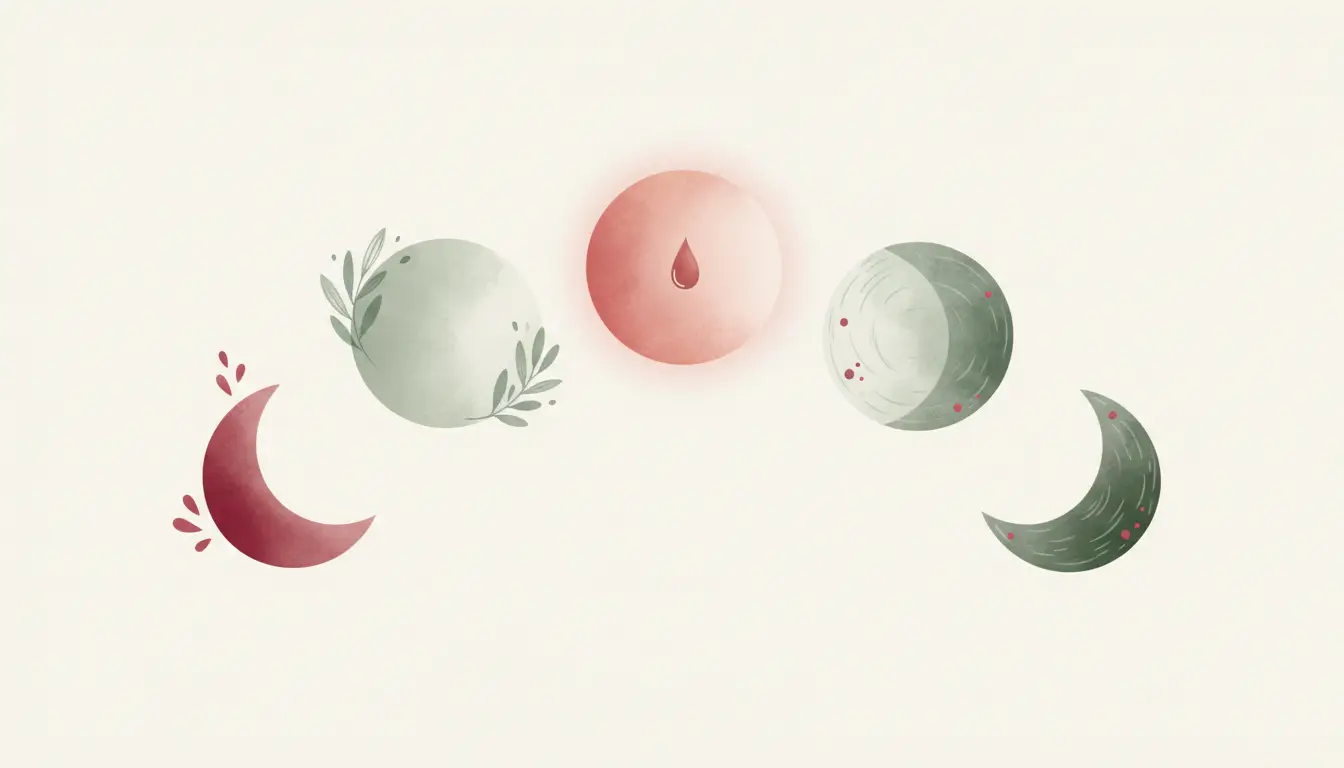
Estrogen and progesterone rise and fall in a predictable wave each cycle, and that wave shapes your energy, mood, sleep and skin. Once you can name the four phases, the month stops feeling random. Here's what happens in each — and how to use it.
1. The menstrual phase (days 1–5, roughly)
This is your period itself. The uterine lining sheds, and both estrogen and progesterone are at their lowest. Energy often dips, and many people feel a pull toward rest and quiet. That's not laziness — it's hormonal. This is a good week to go gentler on yourself, prioritize sleep, and keep demands light where you can.
2. The follicular phase (days ~6–13)
As your period ends, the brain signals the ovaries to mature a batch of follicles, and estrogen begins to climb. This is usually the brightest stretch of the cycle: rising energy, sharper focus, better mood, often clearer skin. The follicular phase is also the part of the cycle that varies most from person to person — and the main reason one person's cycle is 26 days and another's is 33.
Plan with it
If you get to choose timing, the late follicular phase is often the natural moment for demanding work, hard workouts, or big conversations — your body tends to have the most to give.
3. The ovulatory phase (around day 14, but it varies)
Estrogen peaks and triggers the release of a mature egg — ovulation. This is the short, fertile heart of the cycle. Many people notice clear, stretchy cervical mucus, a small rise in basal body temperature just after, and sometimes a one-sided twinge. If you're tracking fertility either way, this is the window that matters most; our guide to ovulation signs and the fertile window goes deeper.
4. The luteal phase (the ~12–14 days before your period)
After ovulation, progesterone rises to prepare the body for a possible pregnancy, then falls if there isn't one — and that fall is what triggers your next period. The late luteal phase is where most PMS lives: mood shifts, cravings, bloating, breast tenderness, and choppier sleep. Knowing this phase by name reframes a rough day from "what's wrong with me?" to "this is predictable biology."
Working with your cycle, not against it
You don't need to overhaul your life around your cycle, but small adjustments help: protect sleep in the luteal phase, schedule the big stuff for your higher-energy follicular days, and stop being ambushed by a body that was actually being consistent the whole time. The first step is simply knowing where you are — which is exactly what tracking your period tells you.
Frequently asked questions
What are the four phases of the menstrual cycle?
Menstrual (your period), follicular (an egg matures), ovulatory (the egg is released), and luteal (the run-up to your next period). They're driven by the rise and fall of estrogen and progesterone.
Which phase has the most energy?
Usually the late follicular phase and ovulation, when estrogen peaks. Energy tends to drop in the late luteal phase, just before bleeding starts.
Why do cycle lengths differ between people?
Mostly because of the follicular phase, which varies the most. The luteal phase is relatively fixed at around 12–14 days for most people.