Home · Period Basics
How to Use a Tampon: A Step-by-Step Beginner's Guide
If you're nervous about your first tampon, you're in good company — and it's genuinely easier than it looks. Here's a clear, judgment-free, step-by-step walkthrough, plus absorbency, safety and the mistakes to skip.
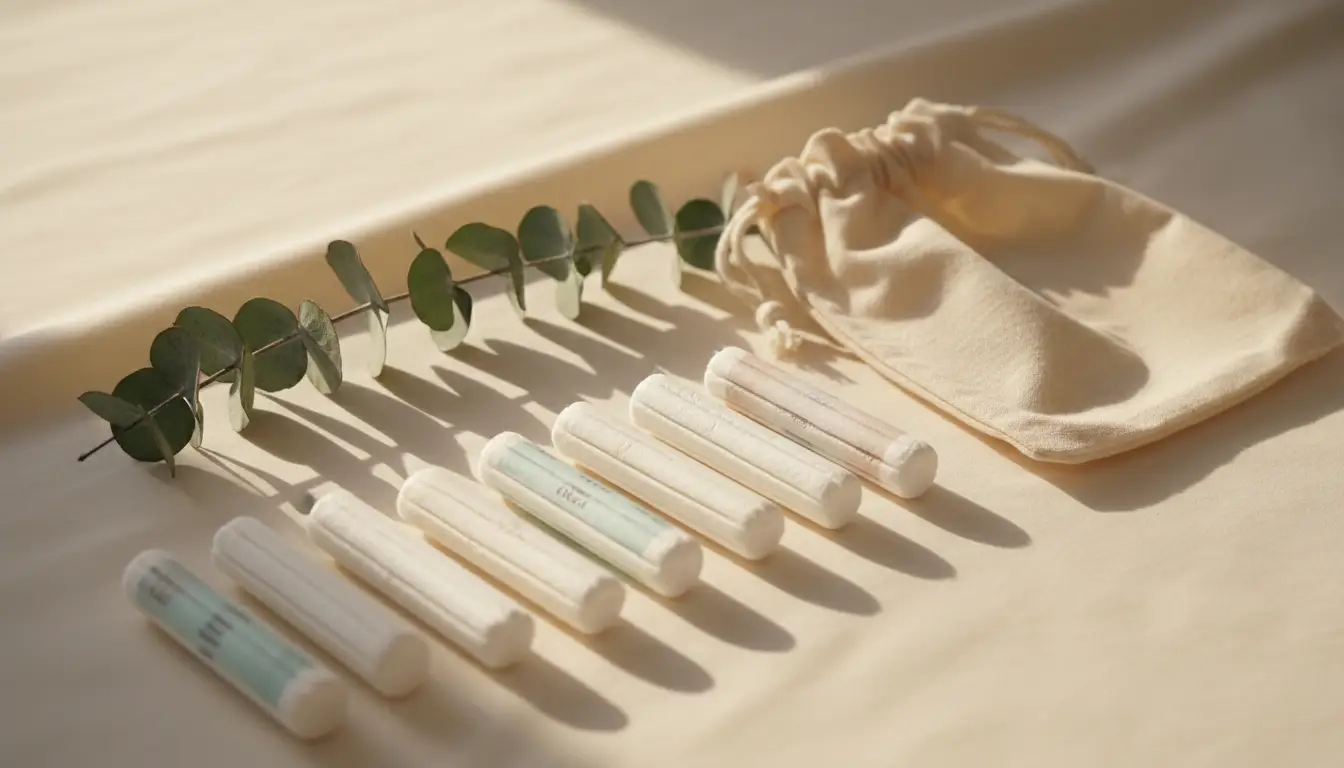
Tampons can feel intimidating the first time, especially if no one's ever explained them properly. The good news: millions of people use them comfortably every month, and once you've done it once, it becomes second nature. This guide takes you through everything calmly and clearly — no embarrassment, no assumptions.
What this guide covers
- What a tampon is
- Choosing the right absorbency
- How to insert a tampon, step by step
- How to know it's in correctly
- How to remove a tampon
- How often to change it
- Safety and toxic shock syndrome (TSS)
- Common mistakes to avoid
- Tampons vs pads vs cups
- Using a tampon without an applicator
- Tampons for swimming, sport & sleep
- Being prepared at school or work
- Tampons and the hymen: myths
- Troubleshooting discomfort
- Choosing your first tampon
- Sizes & absorbency in detail
- A calmer first-time walkthrough
- Tampons vs cups vs period underwear
- Getting supplies & talking to a parent
- Disposal & environmental impact
- Can I pee/shower with one in?
- Tampons with an IUD
- Tampons after childbirth
- If a tampon feels stuck
- Toxic shock syndrome in depth
- Track your period so it's never a surprise
- What readers say
- Frequently asked questions
What is a tampon?
A tampon is a small, cylinder-shaped plug of soft absorbent material that you insert into the vagina to absorb menstrual flow internally, with a string at the end for easy removal. Many come with an applicator (cardboard or plastic) that helps you insert it; others are applicator-free and inserted with a finger. For your first time, an applicator tampon in a regular absorbency is usually the easiest place to start.
Choosing the right absorbency
Tampons come in absorbencies from light to super-plus. The golden rule: use the lowest absorbency that handles your flow. A tampon that's too absorbent for a light day can feel dry and uncomfortable to remove, and higher absorbencies carry a slightly higher TSS risk. Start with regular on a medium-flow day, and adjust up or down based on how full it is when you change it after a few hours.
First-timer tip
Try your first tampon on a day when your flow is moderate, not super light. A little flow actually makes insertion smoother and more comfortable.
How to insert a tampon, step by step
- Wash your hands with soap and water.
- Get into a comfortable position. Sit on the toilet with your knees apart, squat slightly, or stand with one foot up on the toilet seat or edge of the bath. Whatever relaxes your body.
- Hold the applicator correctly. Grip it where the smaller inner tube meets the wider outer tube, with the rounded tip pointing up and the string hanging down and away from your body.
- Position the tip. Place the tip of the applicator at your vaginal opening, angled toward the small of your back — not straight up. This angle matters.
- Insert the outer tube. Gently slide the outer tube in until your fingers touch your body. Take it slowly.
- Push the inner tube. Using your index finger, push the inner tube all the way into the outer tube. This releases the tampon into place.
- Remove the applicator. Pull the whole applicator out together, leaving the tampon inside and the string hanging outside your body.
- Wash your hands again and dispose of the applicator (in the bin, not the toilet).
If it didn't go smoothly the first time, that's completely normal. Relax, breathe, and try again with a fresh tampon — tension is the usual culprit.
How to know it's in correctly
A correctly placed tampon is comfortable and unnoticeable. If you can feel it pinching, poking, or sitting low and uncomfortable, it probably isn't in far enough — you can gently push it a little higher with a clean finger, or remove it and start fresh. When it's right, you genuinely shouldn't feel it at all. The string stays outside, ready for removal.
How to remove a tampon
Removal is simpler than insertion. Wash your hands, get into a relaxed position, find the string, and gently pull it downward and forward at the same angle you inserted it. It should slide out easily. If it feels dry and difficult to remove, the absorbency is probably too high for your flow — size down next time. Wrap the used tampon and put it in the bin; never flush it.
How often should you change a tampon?
Change your tampon every 4 to 8 hours, depending on your flow, and never leave one in for longer than 8 hours. On heavy days you'll change more often; on lighter days, less. A useful habit is to change it each time you'd naturally use the bathroom. Knowing roughly which days of your period are heaviest — something a tracking app makes easy — helps you plan ahead.
Safety and toxic shock syndrome (TSS)
Toxic shock syndrome is a rare but serious bacterial illness associated with leaving tampons in too long or using a higher absorbency than needed. It's uncommon, and simple habits keep the risk very low: use the lowest suitable absorbency, change every 4–8 hours, wash your hands, and consider alternating with pads overnight. Seek medical help immediately if you have a sudden high fever, vomiting, diarrhoea, a sunburn-like rash, dizziness or fainting while using a tampon — and remove the tampon. These symptoms are rare, but worth knowing.
Common mistakes to avoid
- Inserting at the wrong angle (straight up instead of toward your back) — the top cause of discomfort.
- Being too tense — relaxation makes everything easier.
- Using too-high absorbency on light days, which causes dryness.
- Leaving it in too long — set a reminder if you tend to forget.
- Not pushing the tampon in far enough, leaving it low and noticeable.
Tampons vs pads vs menstrual cups
| Option | Best for | Worth knowing |
|---|---|---|
| Tampons | Activity, swimming, discretion | Change every 4–8 hours; mind TSS basics |
| Pads | Beginners, overnight, light days | Worn externally; no insertion needed |
| Menstrual cups | Eco-conscious, longer wear, heavy flow | Reusable; can be worn up to 12 hours |
There's no single "right" choice — many people use a mix depending on the day and activity. Tampons are simply one comfortable, convenient option once you're confident with them.
How to use a tampon without an applicator
Applicator-free tampons are smaller, create less waste and are popular for travel — they're just inserted with your finger instead of a tube. The steps are the same in spirit: wash your hands, get comfortable, and unwrap the tampon. Find the end of the string and make sure it's pulled to hang freely. Place your index finger against the flat base of the tampon, position the rounded tip at your vaginal opening angled toward your lower back, and gently push it in as far as your finger comfortably reaches. As with applicator tampons, when it's placed correctly you shouldn't feel it. Wash your hands afterward. Many people find these just as easy once they've used an applicator version a few times first.
Tampons for swimming, sport and sleep
One of the big advantages of tampons is freedom of movement. Because they sit internally, you can swim with a tampon (a pad would soak through) — just change it soon after you get out. For sport and exercise, tampons stay put and stay invisible under leggings or shorts, which is why many active people prefer them. For sleep, you can use a tampon overnight as long as your night's sleep is within the 8-hour limit; insert it right before bed and change it first thing in the morning. If you sleep longer than 8 hours, a pad or period underwear is the safer overnight choice.
Being prepared at school, work or on the go
Confidence comes from being ready. Keep a couple of tampons in a small pouch in your bag, locker or desk drawer so a surprise start is never a crisis. Knowing roughly when your period is due removes most of the anxiety — if your app tells you it's likely to arrive this week, you can carry supplies in advance. Wrapping a used tampon in toilet paper or its own wrapper and binning it (never flushing) keeps things discreet in shared bathrooms. A spare pair of underwear in your bag is a small comfort that takes the worry out of heavier days.
Tampons and the hymen: clearing up the myths
A common worry, especially for first-timers: using a tampon does not affect virginity. Virginity is not a physical state that a tampon can change. The hymen is a thin, flexible ring of tissue, and in most people there is naturally plenty of room for a tampon to pass through comfortably. Using tampons is completely normal at any age once you have your period, and it has no bearing on sexual history. If insertion is consistently painful despite relaxing and using the right angle and absorbency, that's worth mentioning to a clinician — occasionally conditions like vaginismus make it uncomfortable, and they're very treatable.
When tampons aren't comfortable: troubleshooting
- It hurts going in. You're likely tense or using the wrong angle. Breathe, relax, and aim toward your lower back, not straight up.
- I can still feel it. It isn't in far enough — gently push it higher with a clean finger, or remove and start fresh.
- It's uncomfortable to remove. The absorbency is too high for your flow — size down.
- It leaks. Either it isn't positioned correctly, your absorbency is too low for the day, or it's time to change it more often.
- I can't relax. Try a warm bath beforehand, or start with the smallest size on a moderate-flow day. It genuinely gets easier with practice.
If discomfort persists no matter what you try, don't push through it — talk to a school nurse, pharmacist or doctor. There's no shame in it, and there's usually a simple fix.
Choosing your first tampon: brands, materials and applicators
Walking down the period-care aisle for the first time is genuinely overwhelming, so here's how to narrow it down. For a first tampon, choose a regular absorbency with a smooth plastic applicator — these glide more easily than cardboard, which beginners often find more comfortable. Look for "regular" or sometimes a "slim"/"smooth" first-timer range. In terms of materials, both conventional cotton-blend and 100% organic cotton tampons work the same way; organic options appeal to people who prefer fewer additives, though either is fine. Avoid scented tampons — fragrance can cause irritation and offers no real benefit. Once you're confident, you can experiment with applicator-free tampons, which are smaller and create less waste.
Tampon sizes and absorbency, explained in detail
Absorbency is measured in grams of fluid a tampon holds, and the labels follow a standard scale:
| Absorbency | Best for |
|---|---|
| Light / Junior | Very light days or the start/end of your period |
| Regular | Light to medium flow — the best starting point |
| Super | Medium to heavy flow |
| Super Plus | Heavy flow days |
| Ultra | Very heavy flow (use sparingly) |
The single most important rule: use the lowest absorbency that handles your flow for the hours you'll wear it. A tampon that's barely full after a few hours is too absorbent — size down. One that leaks within an hour or two is too low — size up, or change more often. Matching absorbency to flow keeps you comfortable and keeps the small TSS risk as low as possible. Many people use different absorbencies on different days of the same period, which is completely normal.
A calmer walkthrough for your very first time
If you're anxious, slow everything down. Pick a relaxed evening at home, not a rushed morning. Read the leaflet inside the box once. Choose a moderate-flow day. Take a warm shower or bath first to relax your muscles. Then follow the steps from the section above, breathing slowly — tension is the number-one reason a first attempt feels difficult. If it doesn't work, that is completely normal; throw that tampon away and try again with a fresh one, or come back to it tomorrow. There's no prize for getting it on the first try, and almost everyone finds it easy within a few attempts. Be kind to yourself; this is a skill, and skills take a little practice.
Tampons vs menstrual cups vs period underwear
Tampons are one of several modern options, and many people mix and match. Here's how they compare so you can decide what fits each day:
| Option | Wear time | Pros | Cons |
|---|---|---|---|
| Tampons | 4–8 hours | Discreet, great for swimming and sport, widely available | Single-use; mind TSS basics; insertion takes practice |
| Menstrual cups | Up to 12 hours | Reusable, eco-friendly, cost-effective long term, high capacity | Steeper learning curve; needs cleaning |
| Period underwear | All day / overnight | No insertion, comfortable, reusable, great backup | Bulkier; needs washing; lower capacity on heavy days |
| Pads | 3–5 hours | Easiest for beginners, good overnight | External; not for swimming; can feel bulky |
There's no single best choice — a tampon for the pool, period underwear overnight, and a cup for a long day out is a perfectly sensible combination.
How to get supplies and talk to a parent or carer
If you're young and feeling shy about asking, know that this is one of the most ordinary requests in the world. A simple "I've started my period and I'd like to try tampons — can we get some?" is all it takes. If that feels hard, a school nurse, older sibling, aunt or trusted adult can help, and most schools keep supplies. Many pharmacies and supermarkets have everything you need, often with first-timer multipacks that include different sizes. Keeping a small stash in your bag means you're never caught out, and knowing roughly when your period is due — which tracking gives you — takes away most of the stress.
Disposal and environmental impact
Always wrap used tampons and put them in a bin — never flush them, as they don't break down and cause plumbing and environmental problems. If you're conscious of waste, applicator-free or organic cotton tampons reduce plastic, and reusable options like menstrual cups or period underwear cut it dramatically over time. There's no need for guilt either way; the most important thing is using what keeps you comfortable and healthy, and disposing of it responsibly.
Can I pee, poop or shower with a tampon in?
Yes to all three. Urine comes from a separate opening (the urethra), so a tampon doesn't block it — you can pee completely normally, though some people tuck the string aside to keep it dry. You can also poop with a tampon in, though bearing down sometimes shifts it slightly; if it feels dislodged afterward, you can change it. And you can shower or bathe with one in, which is handy. The only thing to remember is the 8-hour rule and to change it on your usual schedule regardless of these everyday activities.
Tampons with an IUD or other contraception
Having an IUD does not stop you using tampons — the IUD sits inside the uterus, well above where a tampon rests in the vagina, and the tampon only touches the string area. Just be a little gentle when removing a tampon so you don't tug the IUD threads, and if you're ever unsure whether your IUD strings feel different, check with your clinician. Tampons are also fully compatible with the pill, implant, injection and other methods; none of them interfere with each other.
Tampons after childbirth and during postpartum bleeding
This one matters: do not use tampons for postpartum bleeding (lochia) in the weeks after giving birth. While your body is healing, internal products raise the risk of infection, so pads are recommended until your clinician gives the all-clear, typically around your postnatal check. Once you've been cleared and your regular periods return, tampons are fine again. The same caution applies after any procedure where a clinician has advised avoiding internal products for a while.
What to do if a tampon feels stuck
First, don't panic — a tampon cannot get lost or travel anywhere dangerous, because the top of the vagina is closed off by the cervix, which a tampon can't pass. If you can't immediately find the string, wash your hands, get into a relaxed squatting position, bear down gently as if having a bowel movement, and reach in with a finger to locate and pull it out. The relaxed position and a little patience almost always work. If you genuinely cannot remove it, or you think one was left in, contact a healthcare professional or pharmacist — they can remove it quickly and it's a routine, no-judgment situation for them.
Understanding toxic shock syndrome in depth
Toxic shock syndrome (TSS) is rare, but because tampon use is one associated factor, it's worth understanding properly rather than fearing vaguely. TSS is a sudden, serious illness caused by toxins from certain bacteria. The risk rises with higher-absorbency tampons and with leaving a tampon in too long, which is exactly why the standard advice is to use the lowest suitable absorbency and change every 4–8 hours, never exceeding 8. Practical habits that lower risk further: wash your hands before and after, alternate with pads (for example overnight), and don't insert a fresh tampon "just in case" when you don't have flow. Know the warning signs — a sudden high fever, vomiting or diarrhoea, a rash that looks like sunburn, dizziness, confusion or fainting. If these appear while using a tampon, remove it and seek medical help immediately, and mention that you were using a tampon. To be clear: TSS is uncommon, and with sensible habits tampons are safe for everyday use.
Track your period so it's never a surprise
Half the stress of periods is being caught unprepared. Knowing when your period is due — and which days tend to be heaviest — means you can pack the right supplies in advance. That's exactly what cycle tracking gives you; start with our guide on how to track your period or the full method in how to track your menstrual cycle. A good AI period app will even remind you a day or two before your period starts. The app we recommend for this is Vyve AI Period Tracker, which predicts your period privately on your phone; you can read more about its privacy-first approach at Vyve Care.
What readers say
"The calmest, clearest explanation I've found. I finally felt ready to try, and it worked first time."
"The angle tip was the thing nobody told me. Made all the difference. Thank you."
"Shared this with my daughter. Judgment-free and reassuring — exactly what she needed."
"Really clear on absorbency and safety. Wish school had taught it this well."
"Reassuring about TSS without being scary. Balanced and honest."
"And the tip to track my period so I'm never caught out — genuinely changed my month."
Frequently asked questions
Does using a tampon hurt?
A correctly inserted tampon shouldn't hurt and should be unnoticeable. Discomfort usually means it isn't in far enough or you're tense. Relaxing, using the right angle, and starting on a moderate-flow day all help.
How often should I change a tampon?
Every 4 to 8 hours, and never more than 8 hours, to keep the small TSS risk low. Use the lowest absorbency that suits your flow.
Can a tampon get lost inside me?
No — the vagina is a closed space and a tampon can't travel past the cervix. If you can't find the string, relax and reach in with clean fingers; if you truly can't remove it, contact a healthcare professional.
Can I sleep with a tampon in?
Yes, as long as your sleep is within the 8-hour limit. Insert a fresh one right before bed and change it as soon as you wake. If you sleep longer than 8 hours, use a pad or period underwear overnight instead.
Can I swim with a tampon?
Yes — that's one of their biggest advantages. A tampon absorbs internally so you can swim normally, then change it soon after you get out of the water.
What age can you start using tampons?
There's no set age — once you have your period, you can use tampons if you want to. Many people start with pads and move to tampons when they feel ready. It's a personal choice with no "right" timeline.
Why does my tampon leak?
Usually because the absorbency is too low for your flow, it's been in too long, or it wasn't positioned far enough in. Try sizing up, changing more often, or re-checking placement.
Does a tampon affect virginity?
No. Using a tampon has no bearing on virginity, which is not a physical state a tampon can change. Tampons are normal to use at any age once you menstruate.